
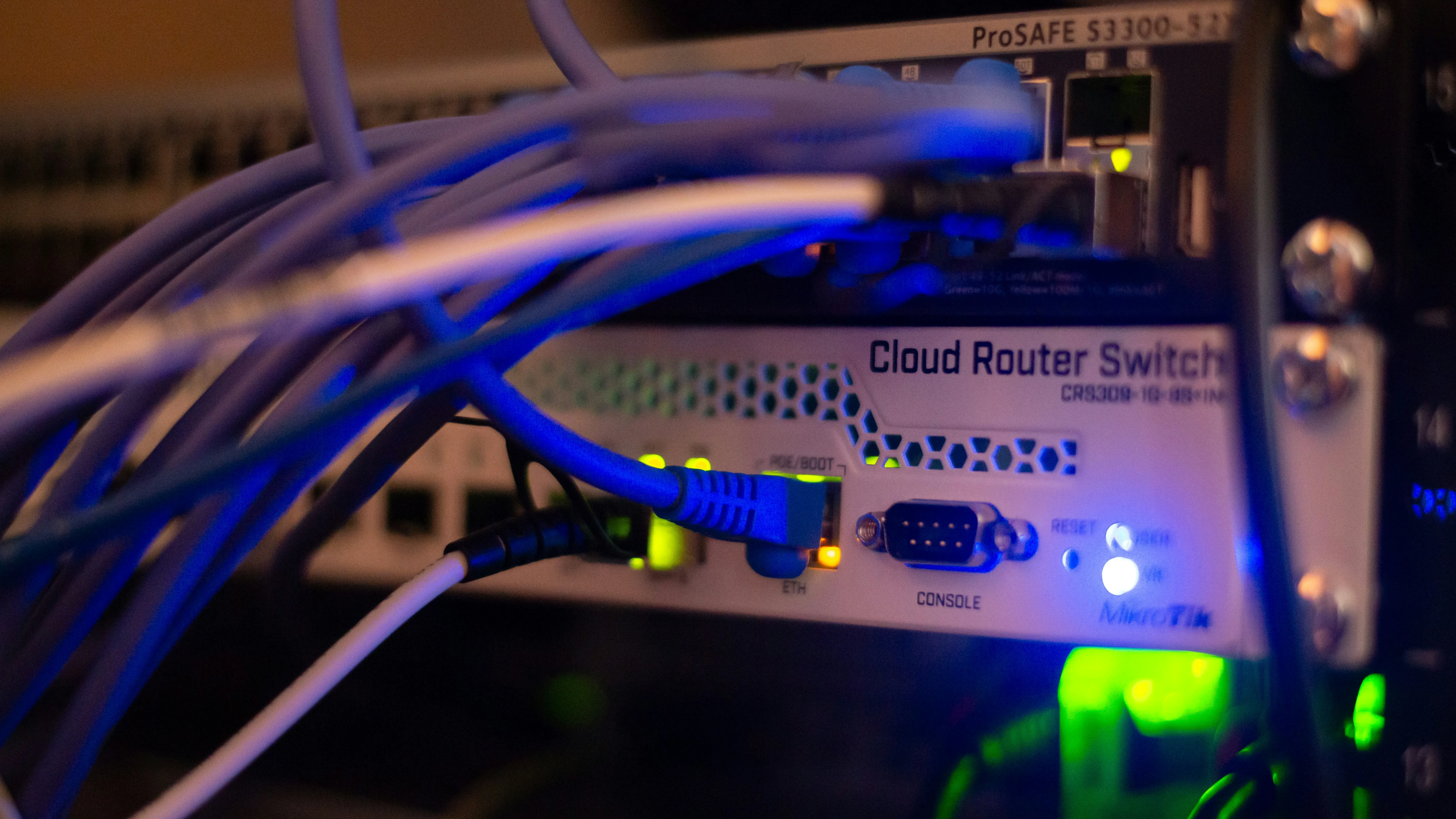
“Managed network” is one of those phrases that’s been stretched so far it doesn’t mean much. Plenty of contracts marketed as “managed” boil down to: when something breaks, you call us, we book a callout. That isn’t management. That’s break-fix with a retainer.
Here’s the line we draw, and what proper network management actually involves.
Reactive vs proactive: the only meaningful test
The honest test of whether a “managed” service is actually managed:
When the network is about to fail, who notices first — you or us?
In a reactive contract: the user notices. They call IT. IT calls the provider. The provider books an engineer. The fix happens after the user has lost a morning of work.
In a properly managed contract: the provider’s monitoring spotted the early warning (a switch port erroring, a WAN link degrading, an AP rebooting under heat) and acted on it before the user noticed anything was wrong.
The cost of the second model is barely higher than the first. The cost to the business is enormously different.
What proactive actually looks like
For our Managed UniFi service, proactive means:
- 24/7 monitoring of every site we manage — switch health, AP status, WAN latency, error rates, firmware versions, client counts. Not a person watching a screen; tooling that pages a person when a threshold trips.
- Firmware updates on a planned cadence. Updates are tested in our lab first, applied during agreed maintenance windows, never on a whim. Vendors push firmware that breaks things; we catch it before it reaches your site.
- Traffic baseline analysis. Once we know what “normal” looks like at your site, we can see anomalies — a switch that’s started saturating, a backup job that’s running into business hours, a new device flooding the LAN.
- Outage alerts before the call. If a link goes down at 03:00 our system pages us. By the time you walk into the office, we already know whether it’s failed back over Starlink or whether we need to be onsite at 8am.
- Monthly reports in plain English. Uptime, top talkers, incidents handled. So when contract renewal comes round, you can see what you paid for.
None of that requires magic. It does require the management to be set up properly on day one, which is why we typically only manage networks we’ve either installed or fully audited.
The hidden cost of reactive
The thing reactive contracts hide is the cost of the waiting. Not the cost of the engineer visit — that’s quoted upfront — but the cost of:
- Staff not working while a switch is down.
- Sales calls dropping during a VoIP outage.
- A school IT manager spending two days a term in panic mode instead of doing IT improvement work.
- Bigger-than-necessary incidents because no one was watching when the small one started.
A site that takes ten unplanned outages a year, each costing half a day of productivity across the team, is paying a lot more for “we’ll come when you call” than for proactive monitoring.
What you should ask before signing a managed contract
Worth asking any provider:
- What do you actively monitor? “Everything” is a marketing answer. Ask for the specific list of metrics, alarm thresholds and who gets paged.
- How often are firmware updates applied? If the answer is “we leave them on auto-update” or “when there’s a problem”, that’s not management.
- Who maintains the documentation? A managed network where the as-built drawings are out of date is one technician’s notebook away from chaos.
- What’s your response time, in writing? Not “we’ll get to you ASAP”. A target measured in hours with a clear definition of what counts as an incident.
- What does the monthly report look like? If they can’t show you a sample, they aren’t producing one.
The answers tell you more about what you’re buying than the price does.
Why we limit who we manage for
We only run managed contracts for networks we have full visibility into. That usually means we either installed them or we’ve audited and remediated them first. The reason is simple: a managed contract on a network we don’t trust is a promise we can’t keep.
When we onboard, the first thing we do is a full audit — cabinet condition, switch firmware, AP firmware, VLAN structure, documentation. Anything that’s out of standard gets fixed. Only then does the contract start counting uptime.
It’s slower to set up. It’s the only honest way to manage a network.
If you’re tired of break-fix
If you’ve got a network and you’re not sure whether it’s actually being managed or just occasionally rescued, the conversation worth having is: what does proactive look like for your site? We’ll walk the cabinet, look at how it’s currently monitored, and tell you honestly whether the existing contract is delivering management or just response.
You can read about how we run Managed UniFi if you want the full spec first.